THE SIX
CITIES OF CIBOLA
Zuñi Region History for
Travelers
In 1583, an expedition led by
explorer Antonio de Espejo was sent to
the Rio Grande valley pueblos in search of two Franciscan priests.
After confirming that the priests had been killed, Espejo headed
westward toward Zuni. On March 11, 1583, he recorded
his stop at a place he called El Estanque de Penol
(pool at the great rock), the first historical record of
El Morro.
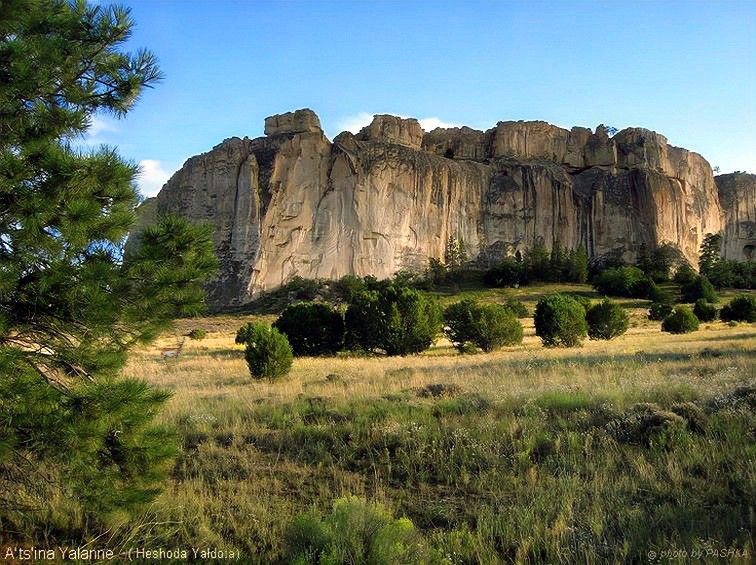
El
Estanque del Peñol
Traveling from the
Pueblo of Ácoma to the Zuni area in March of 1583, Pérez de Luxán indicates:
"We set out from this place [ El Elado ] on the eleventh of the month and
marched three leagues
and stopped at a waterhole at the foot of a rock. This place we named El Estanque del Peñol"
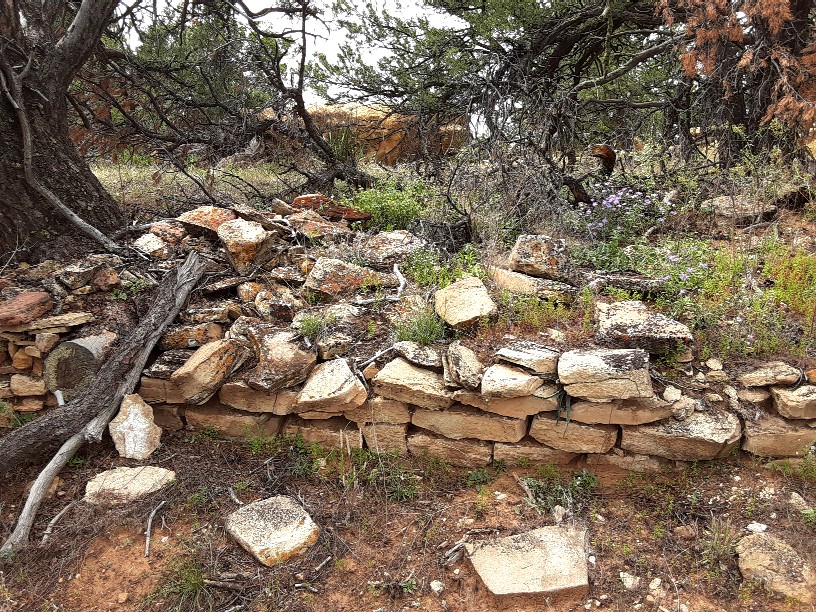
Ruins near El Morro
Evidence for a
visit to El Morro by the expedition of Antonio de Espejo in 1583 is compelling.
The narrative account of Diego Pérez de Luxán, a member of the Espejo party,
suggests it is
highly
probable that this group did camp in the El Morro area.
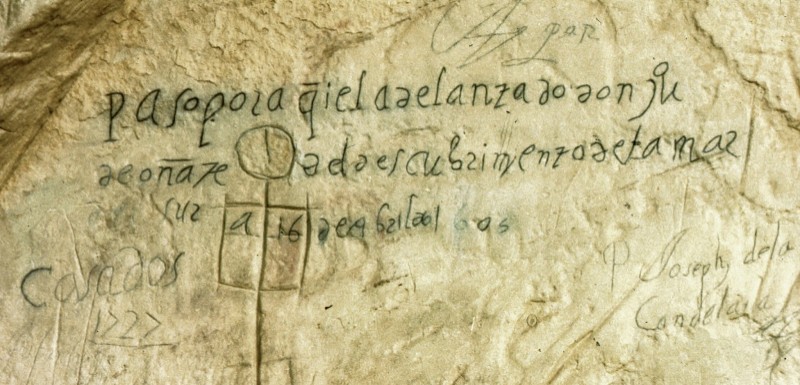
Inscription: "Pasó por aqui, el adelantado Don
Juan de Oñate del descubrimiento de la mar del sur a 16 de Abril de 1605."
There is no question
that the earliest inscription on EI Morro is that of
Oñate,
whose name was
carved in the rock, at which was the "Agua de la Pena," on his return from the
Gulf of California
later in the spring of 1605.
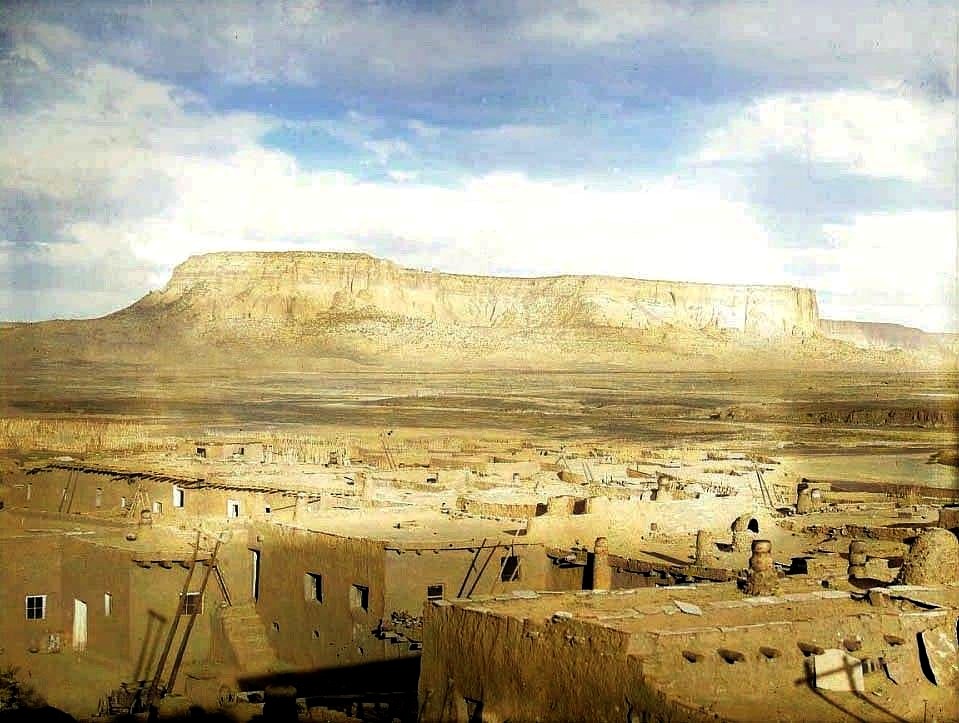
THE SIX
CITIES OF CIBOLA
About seventy-five
miles west of Acoma, on March 14th, 1583,
Espejo arrived
at the
pueblo of Malaque, one of the six pueblos of
the famous Zuni or Cibola
nation.
Because of the
inclement weather, the explorers remained in Zuni almost a month;
most of this time was spent in the western most pueblo, Agrisco. In several of
the
pueblos they found crosses that had been erected by Coronado and Chamuscado.
They also found four Mexican Indians who had remained there after Coronado's
expedition.
"The hides are
from the humpbacked cows [vacas] which
they call civola, and whose hair is like that of cows of Ireland."
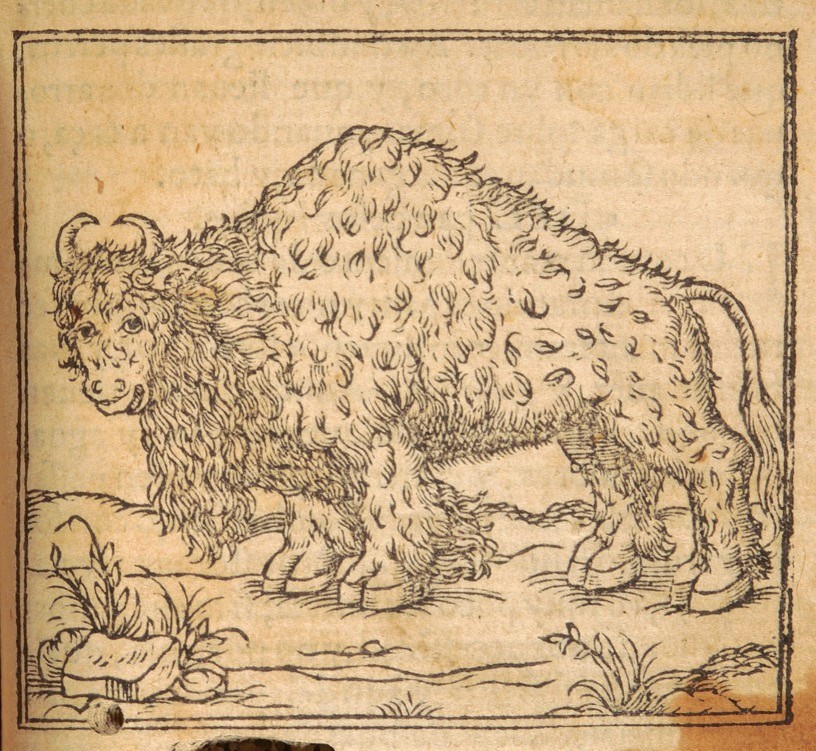
Francisco López de Gómara’s La
Historia General de las Indias
The edition shown above, published in Antwerp, includes the first known
depiction of a bison
C I B O L A
"The hides
are from the humpbacked cows which they call "civola".
~ Narrative of Espejo.
Account of the Journey to the Provinces and settlements of New Mexico
Variant
Spellings
Modern Zuni -
si:wolo
Ceuola -
Marcos De Niza 1539 - The Journey of Alvar Nunez - Cabeza de Vaca
Cibola. - Castaneda (1540-96)
Sivola. - Relacion Postrera de Sivola (ca. 1542)
Zibola. - Perea, Verdadera Relaci6n, Madrid, 1632
Tzibola. - Mota-Padilla (1742)
The entire group of
pueblos was called "the kingdom of Cevola",
and each has its own name and no single one is called Cevola,
but all together are called Cevola. - Friar Marcos De Niza
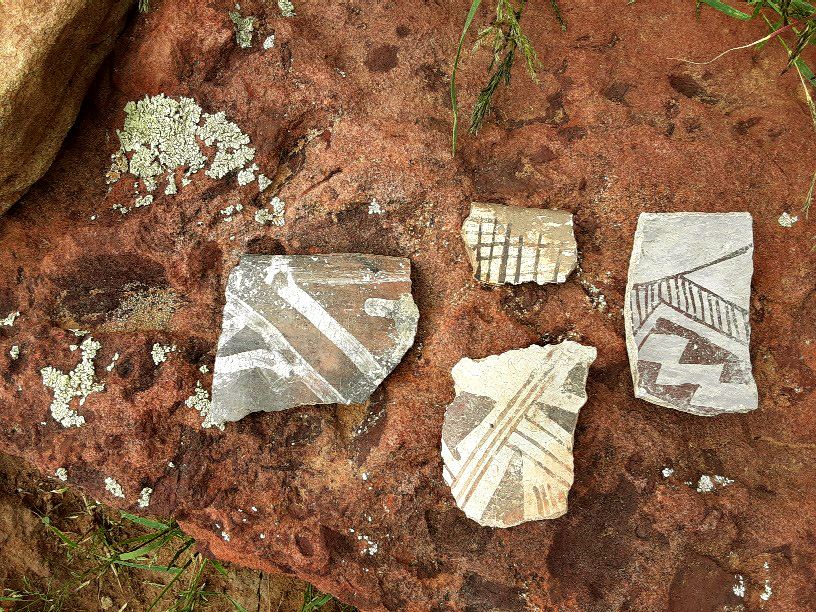
Ruin shards near El Morro
Two days later (May
31, 1583) Espejo and his eight
companions took leave of the Zuni Indians.
From Galisteo,
Espejo crossed the mountains to the
northeast to
the Pecos River Valley. A short distance from
that river, which
they
called Rio de Las Vacas,
because of the buffalo that ranged it's banks.
If Cibola was a
known Spanish word,
why didn't Espejo use it for the Rio de Las Vacas?
Because Cibola wasn't Spanish, ... yet.
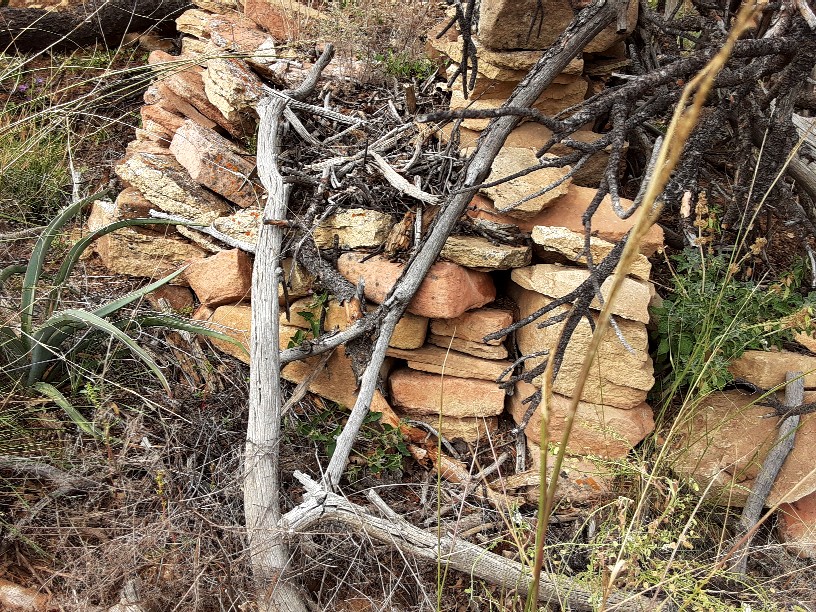
Ruins near El Morro
Resources
Hodge, F. W.. "The Six Cities of Cíbola, 1581–1680."
New Mexico Historical
Review 1, 4 (1926)
Mecham, J. Lloyd "Antonio de Espejo and His Journey to New Mexico"
The
Southwestern Historical Quarterly ,
Oct., 1926, Vol. 30, No. 2 (Oct., 1926), pp. 114-138
*Note - In
comparative historical linguistics, the reconstructed Proto-Kiowa-Tanoan root
for bison is *kol-.
Tewa: Kóo-hyáre (“buffalo dance”). Cibola was not
loaned from Tanoan contacts.
The modern Zuni
word for herd, livestock is "wo-".
Si:wolo
(bison)
has that
"wo-"
hooved root component.
Perhaps
"hairy herd"
fits, with
- lo
affixing a collective form.
"That hairy herd"?
Just a theory.
.
|||

Vowel and Colon = Long Vowel
~ ~ ~ Webpage by
𐍅𐌰𐌿𐍂𐌳𐌰𐌻𐌰𐌹𐌺𐍃.
ZUNI
LANGUAGE DICTIONARY / VOCABULARY Link
KERESAN LANGUAGE CONVERSATIONAL PHRASES Link
KERESAN LANGUAGE VOCABULARY Link
DINÉ LANGUAGE CONVERSATIONAL PHRASES Link
EL
MORRO QUADRILINGUAL VOCABULARY Link
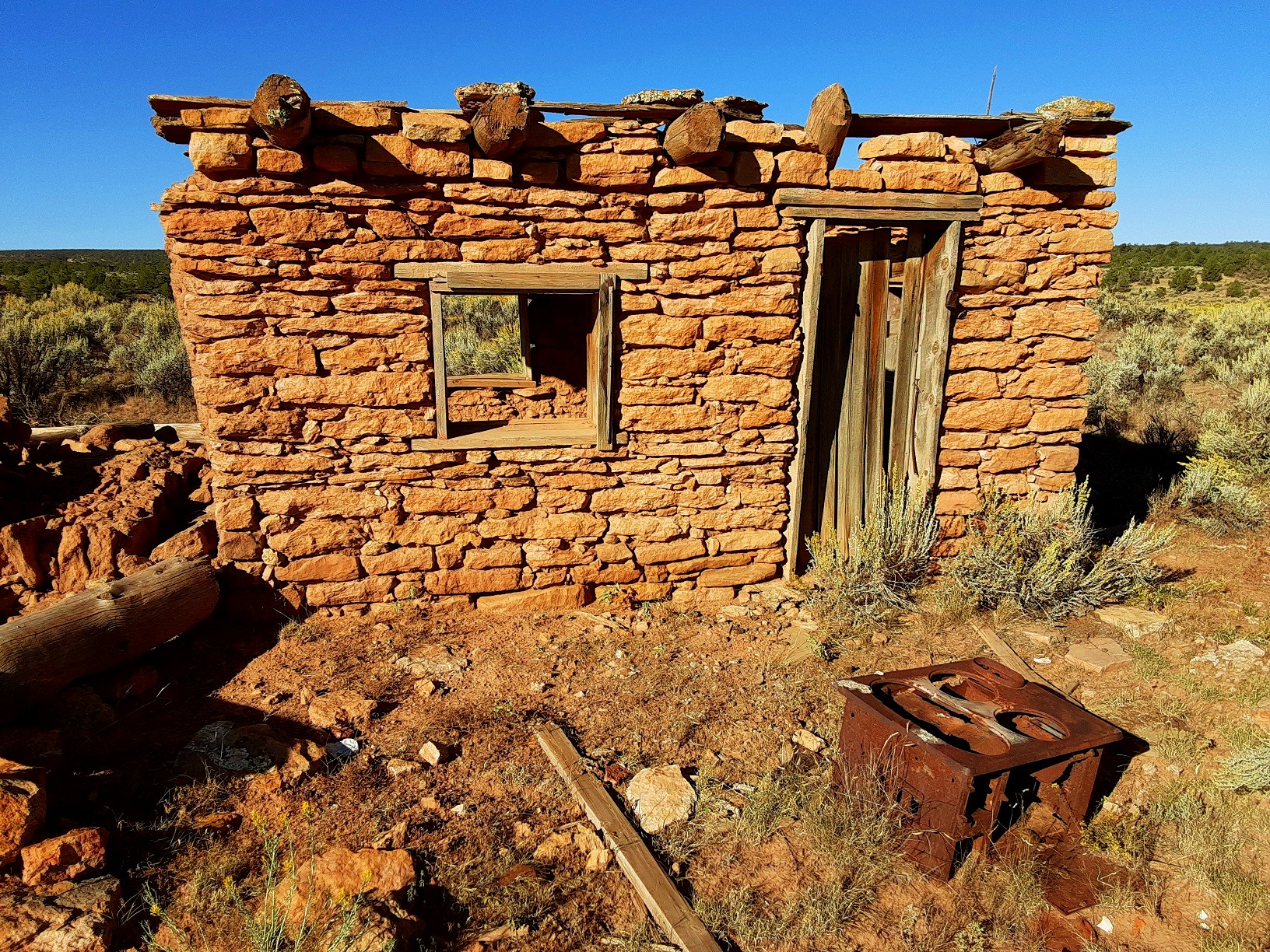
Toward the west, they came to a certain
province called by the inhabitants themselves Zuny, and called by the
Spanards Cibola
Click Here for PDF of a ZUNI
Public School District
book on
Greetings
Link to - New
Mexico Digital Zuni Language Materials Collection
A Sincere "Thank You"
to those Brave Souls who have defended
our Freedom of Speech

NAMPEYO of
Hano Vintage Hopi-Tewa Pottery for Sale