The Sūdovian language belongs to the Indo-European linguistic family. It is a branch of the Baltic group of languages. Of this group, the Lithuanian and Latvian languages are more well known. Together with Old Prussian they share an extraordinarily archaic lexicon. Sūdovian is therefore also of first-rate significance for Indo-European linguistic studies.
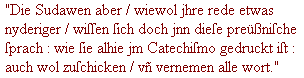
Recent scholarship has suggested Sūdovian linguistic influence in the 2nd and 3rd Old Prussian Catechisms, which were also produced for the many exiled endogamic Sūdovians in Sembia. The Preface to the First Old Prussian Catechism of 1545 comments on how the two languages are mutually intelligible - that although the Sūdovians sound more "rustic", they understand this Prussian language as it is printed in the Catechism, and they express themselves well & understand all words.
" Vorskaitas "
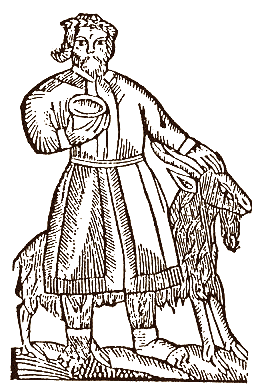
The account of Hieronymus Meletius', Warhafftige Beschreibung der Sudawen auff
Samland sambt ihren Bock heyligen und Ceremonien ( True Description of the
Sūdovians in Samland along with their goat sanctifications and ceremonies ) that came out
in two editions ( Konigsberg 1561 ) contained a few phrases or sentences from
the exiled
Sūdovian endogamic enclave as well.
( Variant spellings of variant versions available at this
TITUS
TEXTS link
)
Kails naussen gnigethe.
Kellewesze perioth, Kellewesze perioth.
Ocho Moy myle schwante Panike.
Beigeite beygeyte peckolle.
Kails poskails ains par antres.
There is also the wealth of regional toponyms, hydronyms, and accented vocabulary
preserved for us by those that remained in their homeland, and survived
the Holocaust of the Crusade against them.
This restored Sūdovian-Yotvingian lexicon draws from all those historical and many other authentic regional sources. Errors in the old
spelling have been corrected by a direct genetic
descendant of a Wielbark Sūdovian. Assertions by a few Academics that there are no such records of the Sūdovian-Yotvingian language are evidently baseless propaganda, and patently false.
These same Academics label the above Sūdovian words as "Old
Prussian". Abipusība ast dermē.
"Esamoji medžiaga neduoda nė vieno kalbos fakto,
kuris rodytų jotvingius kalbėjus ne prūsų kalbos tarme.“
- K. Jablonskis
Why did the Sūdovians, Dainavians, or Yotvingians "vanish"? For the same reason the Anasazi in the American Southwest "vanished". It is the fiction of utterly incompetent & effete Academics - defending the fictitious lies of a powerful Church and / or their waning reputations. It never, ever happened.
As for the depopulated "wasteland" myth of the Crusader's propaganda priests, the evidence does not reflect it ever happened. The highly respected archaeologist, Pranas Kulikauskas, notes on page 164 in his 1982 book "Užnemunės piliakalniai", that the archaeological evidence of the Užnemunės region does not support such a depopulated "wasteland" myth. The wealth of old hydronyms & toponyms there would agree, as does the very low regional frequency of the LWb allele. In fact, the northern part of the Užnemunės region was densely populated at that time, and may explain the later post-Grunwald-Melno influx of new immigrant settlers to the south. The Yotvingian Egline hillfort excavations did not find a destruction layer.
Die-hards will inevitably refer to the decreased pollen records of that period
to prop up "the Lie". Science has now confirmed the "Little Ice Age" (LIA)
of that time did occur in the Northern Hemisphere. There were widespread crop
failures throughout Europe. The Greenland Viking colonies either abandoned
their homes or wasted away. China's orange crop crashed. In 1484 Pope Innocent
VIII issued a papal bull called "Summis desiderantes", which
specifically condemned the use of cannabis as "Satanic" - all due to the
widespread cataclysmic crop failures of
the
"Little Ice Age" (LIA) - which had been blamed on residual European "Pagans" and their
antiquated practices.
The myth of Terra Nullius was merely
historical propaganda - a Lie, justifying Papal conquests and atrocities in both
the Old and New World. The new science of <
DNA
> has exposed those Lies as merely fiction. A
census by the Orthodox clergy of the Belarus Grodno area in
1860 had as many as 30,929 inhabitants identifying
themselves as Yatviags (
Яцвягаў
- GDL descendants). Today, Sūduva is officially called
"Suvalkija", as an acquiescence to protect the old
Lie of the powerful, and it's related
ethnocidal propaganda. More nonsense. But simpletons believe this nonsense.
Even still to this very day!
Studies in various languages (Proto Indo-European, Proto Baltic, Proto West-Baltic, Proto Slavic, Proto Germanic, Hittite, Old Indic / Sanskrit, Old Persian / Avestan, Celtic, Old Norse / Icelandic, Old Armenian, Khotanese Saka , Old Sogdian, Yagnobi, Tokharian, Albanian, Dacian, Thracian, Gypsy, Old Church Slavic, Old Russian, Belorussian, Old Lithuanian, Curonian, Samogitian, Estonian Finnic, Turkic, Nostratic, etc,...) will be enriched by the lexical treasures Sūdovian has to offer.
Historical forces almost exterminated the various West-Baltic dialects. Today, the Prussian language is enjoying a revival primarily due to the exceptional scholarship of the late great Prof. Vytautas Mažiulis and Prof. Letas Palmaitis. An online dictionary is available here. Perhaps a restored Sūdovian-Yotvingian language ( known also by the names język jaćwiński, яцьвяжская мова ) will also fare as well. We hope so.
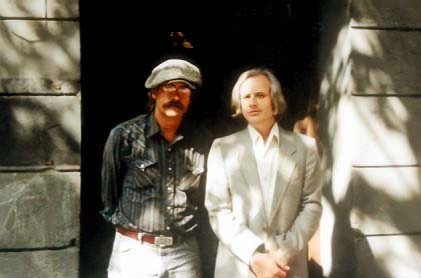
Vorašai Giniai
Sūdovian, aka "Yotvingian", vocabulary, terminology, and accentuation has a natural continuum evident in current dialects of their lineal descendants in Lithuania, Belarus, and Poland. Sūdovian, aka "Yotvingian", is resting, not dead. Of those whom have inherited it as a birthright, some may choose to use it more. It is a U.N. recognized Indigenous Cultural Right ( re: Articles 13 & 16 ) and choice they may freely make for themselves. It is a genuine indigenous continuum of our native WHG Neman & later Sūdovian-Dainavian-Yotvingian cultures, as is our DNA. Mes paliksim.
By including just one word of the historically authentic Sūdovian greeting "Kails", the Lithuanian, Polish, and Belarusian inhabitants of the old Sūdovian, Dainavian, & Yotvingian area may transcend petty ethnic, political, and religious differences and instantly re-affirm a long forgotten unity they still share with each other. DNA does not lie. People lie. It can minimize the petty modern neo-tribalism of politics, superficial ethnicity, language, and religious dogmas. "Kails" re-affirms that we are all One - with each other, and with the Earth we share.
This small restored lexicon (Слоўнік), by a direct genetic ( R-BY164240 ) descendant of a Wielbark Sūdovian, is a memorial to the Holocaust of the Sūdovians, Dainavians, & Yotvingians - the descendants of which, having mixed in ( as area dialects & genetics reveal ), still walk and inhabit this present world. Nobody " vanished ". Get real. "When in doubt, tell the truth" - Mark Twain.
Sūdovian was the language of immense forests, long rivers,
and
our forefathers in Sūduva. It is,
our language.
It is surviving. It is waking.
Kails
!
...select next topic from Contents
- Joseph Poška

Virdainas - U.S.A.
Copyright 1994
All Rights Reserved
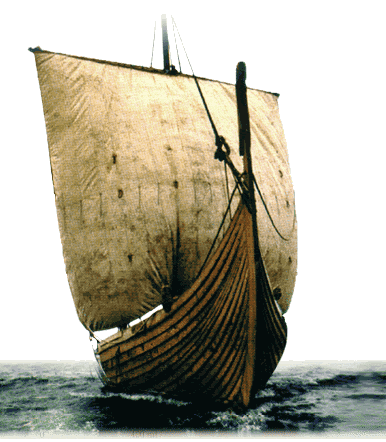
* For more about a Norse Rus' Yatviag /
Yotvingian etymology, see:
Кибинь A.С. Ятвяги в X-XI вв.:
« балтское племя » или « береговое братство »?
//
Studia Slavica et Balcanica Petropolitana. 2008. № 2(4). С.117-132.
A special "Thank You" to
M. Gorska &
Activists
for protecting the Jaćwież lands from desecration.
>>>
USAGE GUIDELINE
<<<
For use by
Sūduviai, Jotvingiai,
Яцвягi, Jaćwingowie,
& their descendants.
as an officially acknowledged
Indigenous
Cultural
Right
( re: Articles 13 & 16 )
Mes paliksim.
United Nations Declaration
on the Rights of Indigenous Peoples