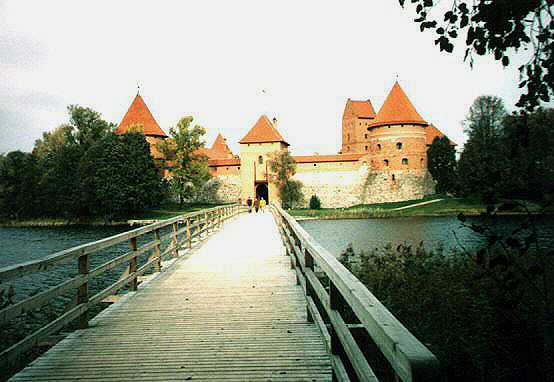
TRAKAI, LIETUVA
- Photo by Pashka
Click here for a Photo from inside Castle.
| Vytautas the Great was born
at Trakai. He referred to Sūduva as his inheritence, due to his Sūdovian
lineage. Vytautas was the prince of Grodno from 1376 to 1392, and he
stayed in Grodno during his preparations for the
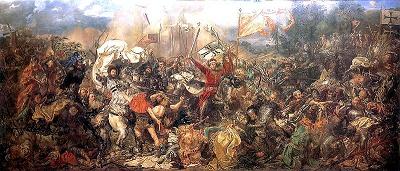
Battle of Grunwald (1410). Since there
were many exiled Yotvingian / Sūdovians finding refuge from the Crusaders
near Grodno at that time, there is no doubt that Vytautas was in command of the
Яцьвягі / Sūdovians during the
Battle of Grunwald.
Fifty Polish and 41 Lithuanian banners included Russian
and Belarusian - Ruthenian lands controlled by Poland and Lithuania,
respectively, as well as the banners from independent territories that
joined the alliance (including the Novgorod banner.)
The long centuries of Sūdovian sacrifice and resistance against the Crusaders of the Roman Catholic Church allowed crucial time for Lithuanians - Poles - Belarusians to prepare a defense. Grand Duke Vytautas of Lithuania used
Grodno (Hrodna) as his primary military headquarters and staging ground.
Historically, the Grodno region had deep ties to the Yotvingians. Once the
entire army was synchronized, Vytautas led his troops out of the Grodno
region to cross the Narew River.
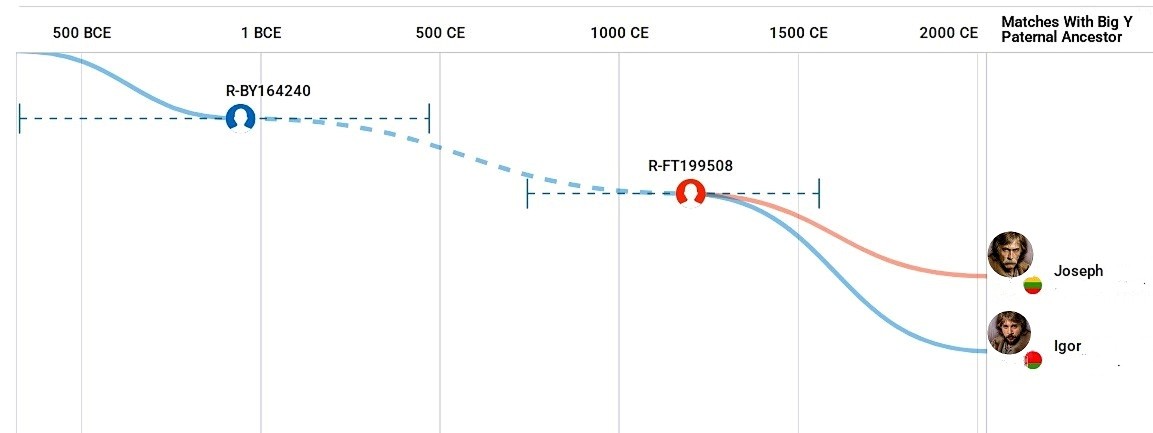
A census by clergy in the area around Grodno, Belarus in the later half of the 1800's identified about 31,000 surviving Яцьвягі ( Yotvingians ). Their descendents now fill that region. Modern genetic studies prove it. FTDNA Y-dna documents Яцьвягі nearby.
The ethnocide against Яцьвягі / Sūdovians is very real and actively practiced* in Lithuania, Poland, Belarus, and Sweden. |
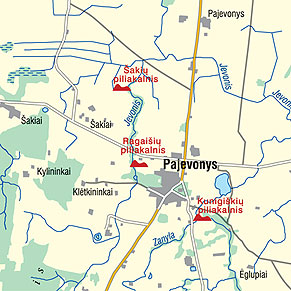
Sūdovian Castle locations
near Pajevonys,
Lietuva

*
The Republic of
Lithuania ruled in 2005 that SŪDUVA is only an ethnic/cultural term.
~ Sūduva was not allowed to vote! ~
Use back button to return, or close window