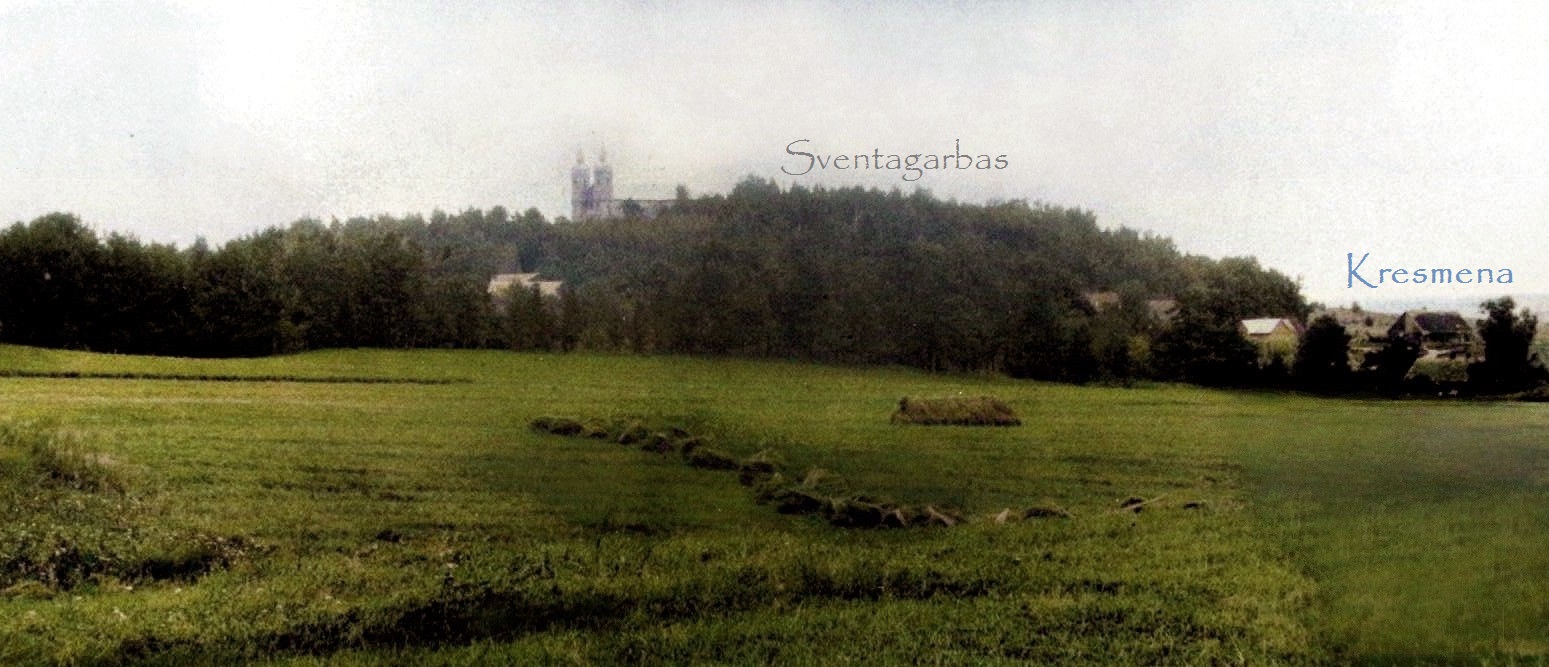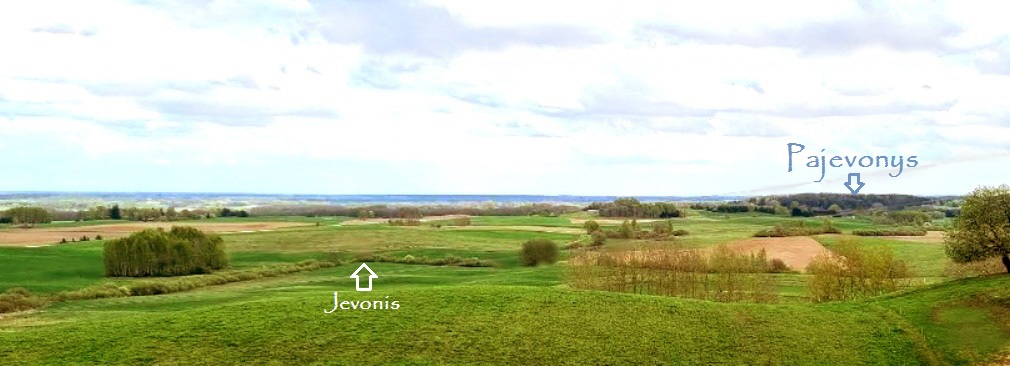
Jevonis
The Jevonis
is a creek that runs near the town of Pajevonys
in Lithuania. According to
map data,
it is about 11 km long.
It is
a tributary of Zanyla creek.
And like the Zanyla,
it's hydronym is a local relic
from times prior to the language conversion of
the locals to the Lithuanian language.
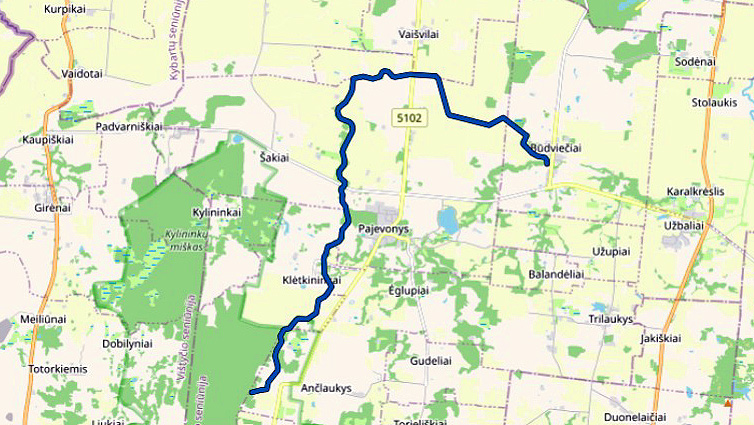
The Jevonis drainage
basin
The Sūdovians of that
region were also known
by the names - Jaćwingowie, Яцьвягі,
or earlier Σουδινοί
(Ptolemy - * 2nd Century A.D.)
The local people didn't
"vanish",
instead, they culturally adopted Lithuanian
as their language, along with culture.
So to propose an
etymology for Jevonis,
and Zanyla, for that matter, one should
consider the native Sūdovian language.
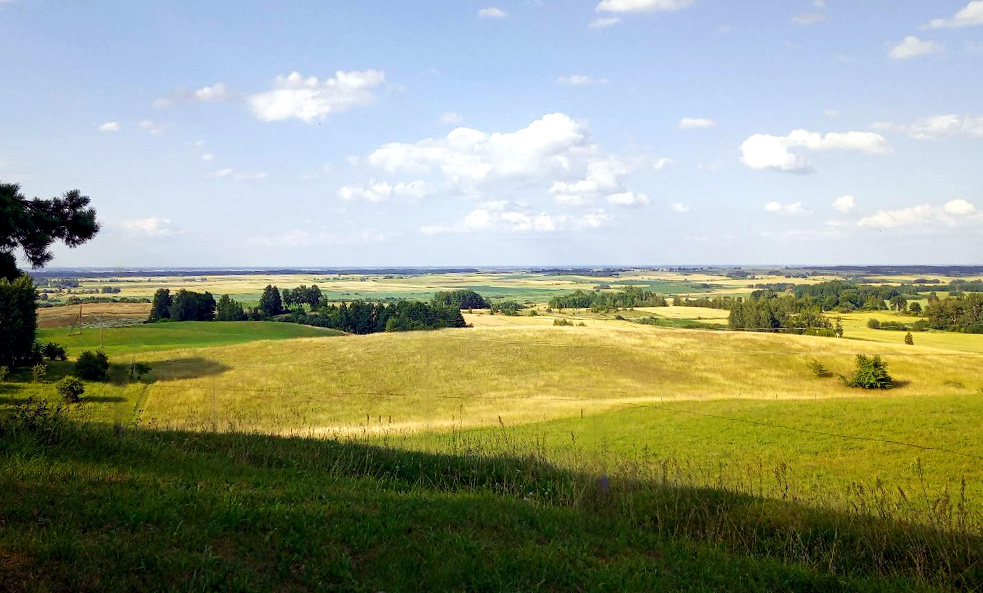
Šakiai kaimas - our Naujeliai kinfolk hail from
there
There exists a word in
Lithuanian, "ievonas",
which exhibits a similar Baltic "ana" suffix. It is
known to imply a characteristic of the
Baltic root word. Examples are:
Lith. kupronas 'humpbacked person',
valdonas 'ruler, zvejonas 'fisherman.
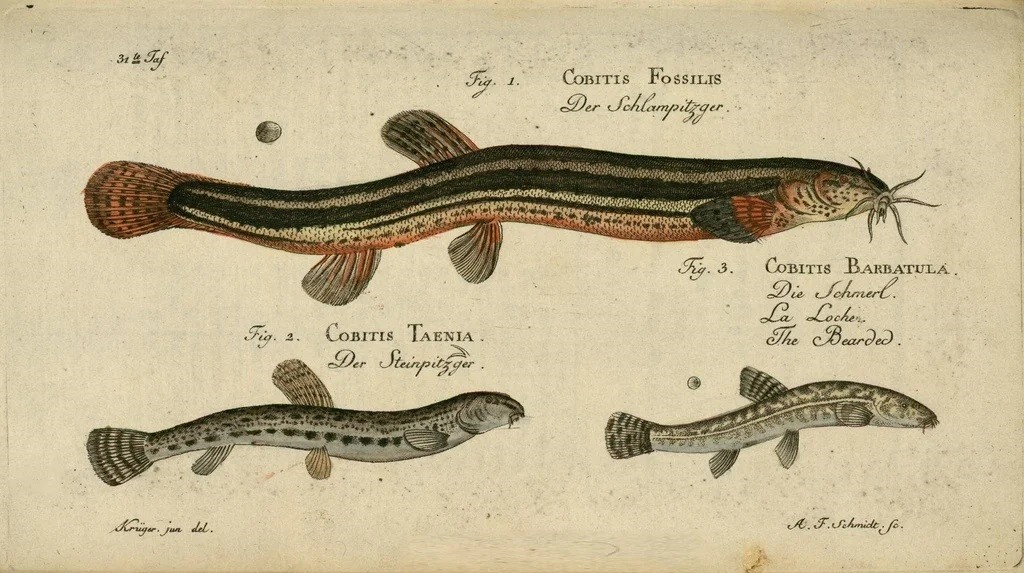
But unless the Jevonis is
infested with "ievonas" fish,
(like lower left in picture) another serious etymology
must be considered.
Lithuanian is an East
Baltic language, where as
Sūdovian was a West Baltic language before it
faded away. Language loss usually occurs in
three generations, so local terms persisted.
The Baltic "ieva"
(< *eiva)
Prunus padus
fauna root may have had similar,
but unique connotations in Sūdovian. The Slavic cognates
(< *eiva)
imply "goat willow". Both have bright white blossoms.
And as the top Jevonis creek photo illustrates,
small shrubs appear to line both sides of the Jevonis.
Yotvingians knew of "Blinduppe", so an inventory
of what shrubs are there would clarify matters.
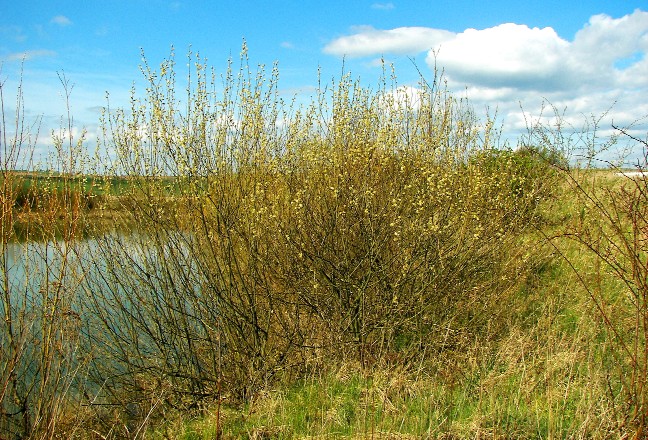
Both Bird Cherries and Creek Willow (Salix
caprea) have white flowers in Spring.
In other words,
Jevonis is most likely "Padus Creek".
As for the -is ending, consider "vakaras / vakaris",
connotating a derived characteristic.
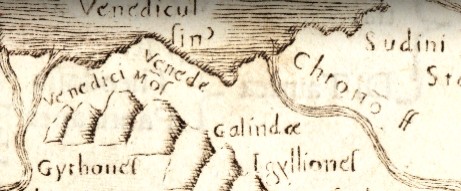
Ptolemy map - Σουδινοί
* Ptolemy's
Σουδινοί
is probably a manuscript copy typo for
Σουδιυοί.
Σουδινοί
/ Σουδιυοί.
Duh.
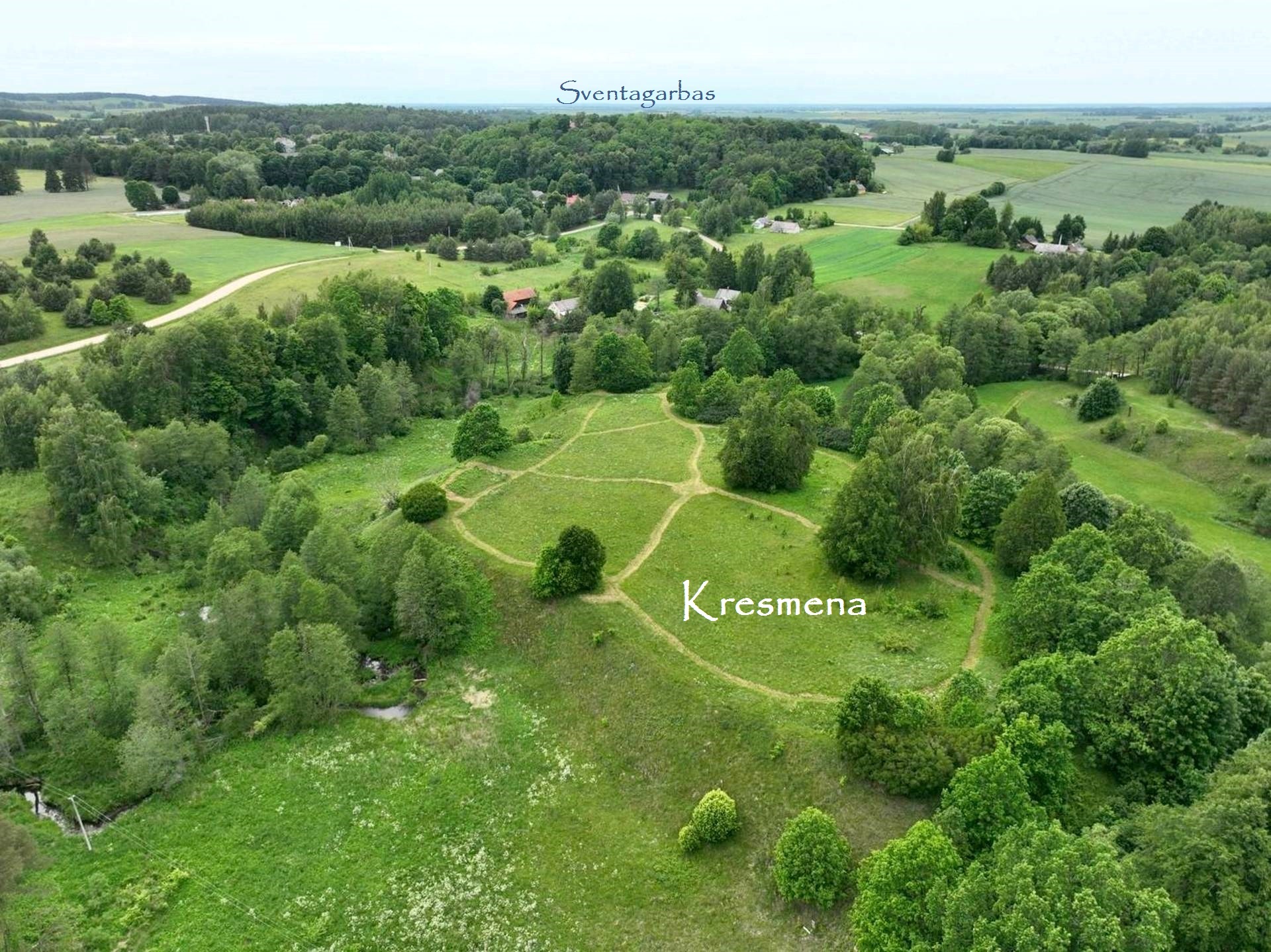
The Kunigiškiai complex may well have been known as " Kresmena "
The Skardupis flows along the Kunigiškiai
hillfort's
"steep slopes", which is how it may have earned it's name.
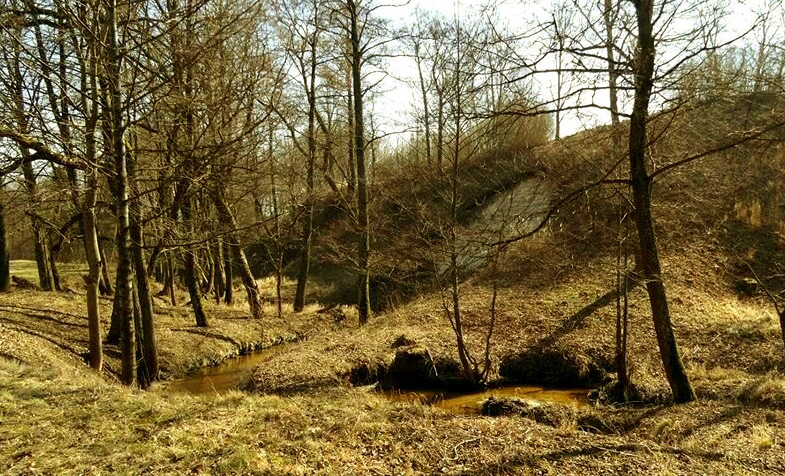
Skardupis by Kunigiškiai's slopes
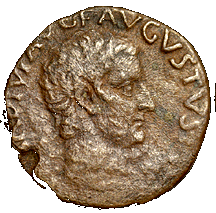
"Netoli nuo piliakalnio yra didelis
kalnas, senovės pušimis apsipuošes,
ant kurio šiandien stovi Pajevonio bažnyčia, o senovėje čia buvus žinyčia.
Pilis turėjo būti labai seniai įtaisyta, nes čia 1855 m. atrasto tapo
romėnų keli pinigai, būtent ciesorių Tiberijaus ir Kaligulos.
Pajevonis guli Suvalku gub., Vilkaviškio pav."
- Dr. J. Basanavičius
West of Kunigiškiai hillfort, the Zanyla
flows north
Zanyla probably meant "Flowing Creek".
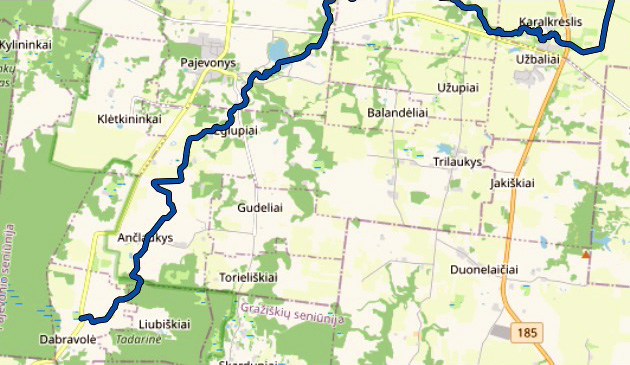
Zanyla drainage basin
According to online data, it is about 22 km long.
Zanyla moves, it flows. Note - Liet: " ženyti " - to flow
As a result of the
loss of the phonemic contrast between e & a,
Sūdovian *ĕ frequently passes to ă, as in Zanyla, or
Asenis (Fall)
A variant spelling "Zenila" was once documented.
( ie. Kalb. A. Vanagas - LIETUVIU
HIDRONIMU ETIMOLOGINIS ŽODYNAS )
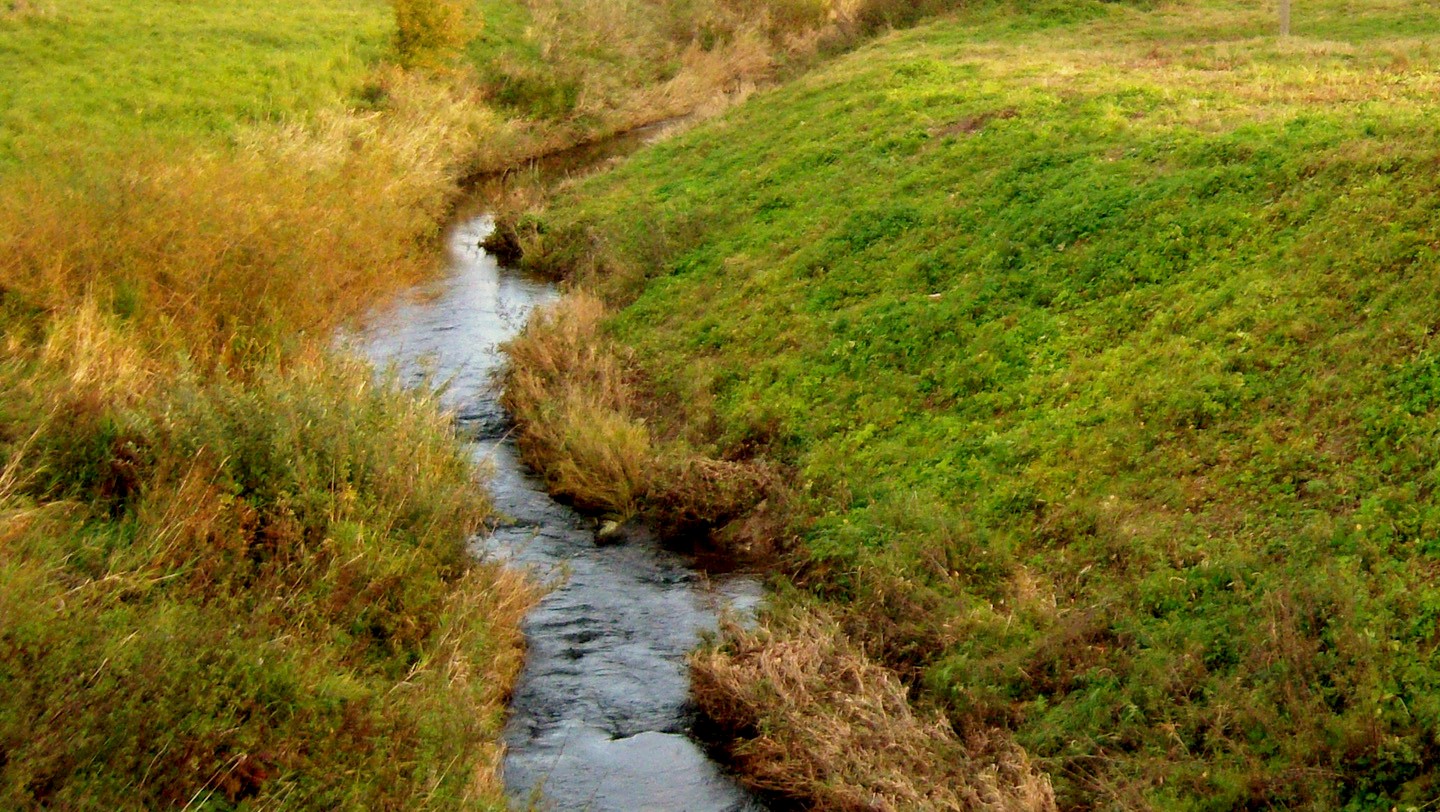
Zanyla Upelis
Good people lived nearby,
like Justinas Naujokaitis,
who was a neighbor to our family in Ėglupiai, Sūduva.
The Zanyla flows on the other side of the trees.
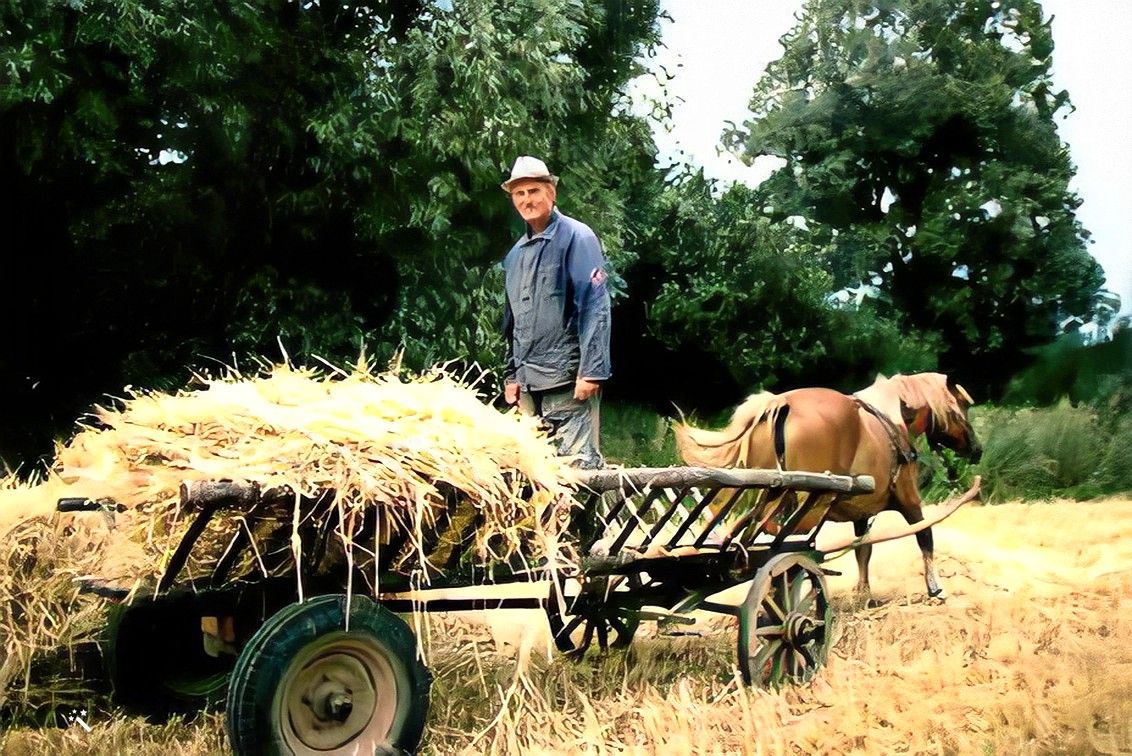
The Poet Justinas Naujokaitis, near his home in Ėglupiai, Sūduva.
There is no need to
interpret Ėglupis. Juniper Creek
Iš liet, ėglis „kadagys“ (Juniperus communis ) (LKŽ
II 1052)
< Sirvydas - Dictionarium Trium Lingvarum )
I was lucky enough to
meet with Naujokaitis several times
when visiting the
"old family farm". Justinas
remembered my grandpa, Kazys.
Justinas is gone now.
Everyone misses him.
People have forgot about "Hagberry Creek".
I didn't. My Grandpa swam there.
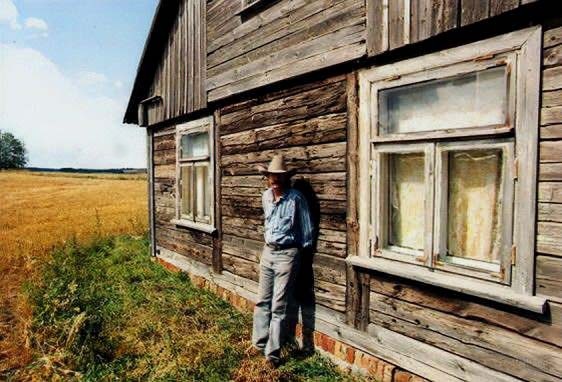
Dimstis Paškevičių - Latitude 54.5126653896,
Longitude 22.8093788267
The Jevonis is located on the
horizon in this Ėglupiai photo.
As a subcategory of toponymy (place names),
hydronyms are crucial in studying linguistic history,
often retaining ancient names after populations change.
Santrauka
|
Tas Jevonis yra
upelis, tekantis prie Pajevonio miestelio
*
Ptolemėjaus
Σουδινοί
tikriausiai yra
kopijavimo klaida iš
Σουδιυοί
ankstesniame rankraštyje.
Kunigiškių kompleksas galėjo būti žinomas kaip
„Kresmena“
|