
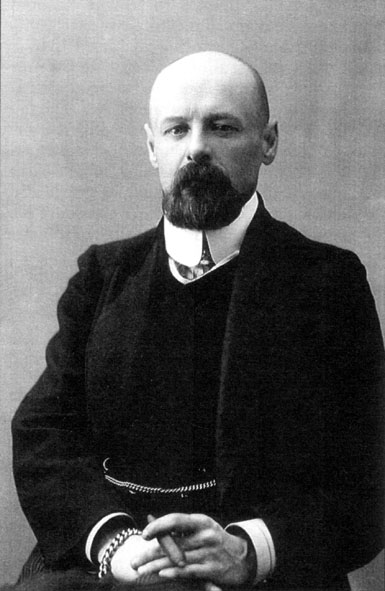

2. Empress Alexandra with Heir Alexis on Mars Field on the background of the Summer Garden. 1915.
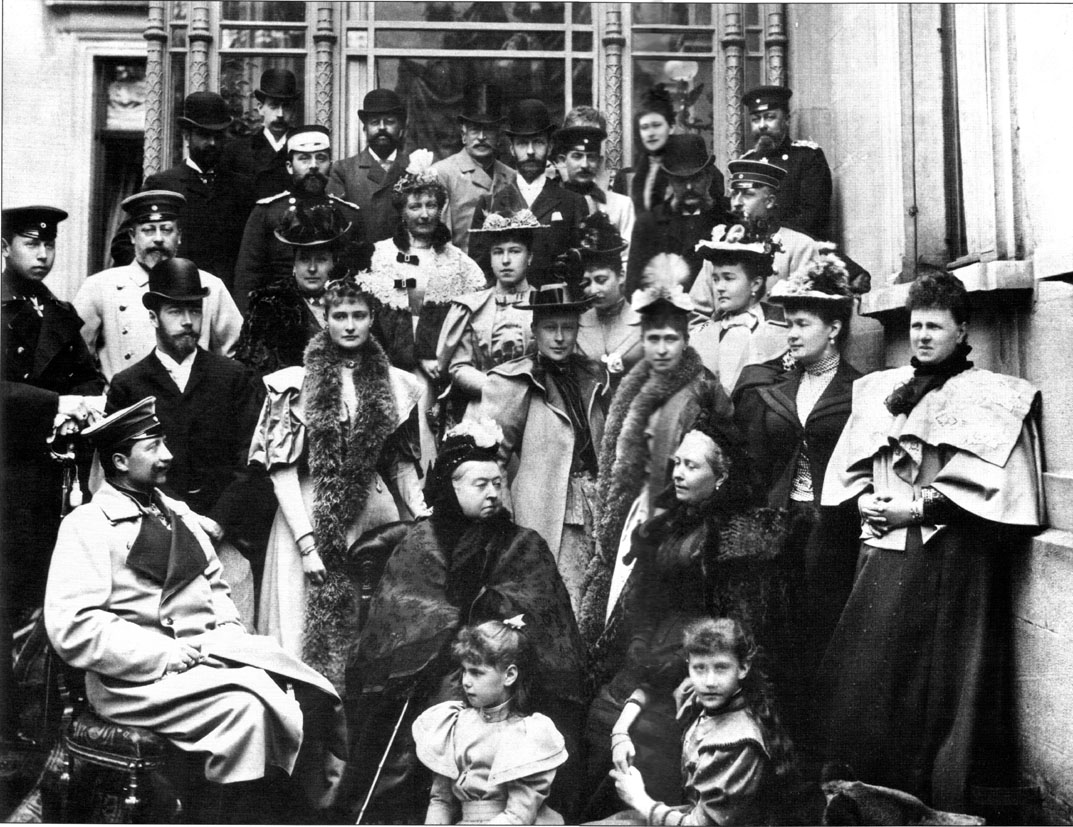
3. Nicolas II and Alix Gottorp Romanov (the 2nd and the 3rd left in the 3rd row) among their relatives in Gr. Britain. In the 2nd row German Kaiser Wilhelm II is sitting 1st from the left, the 2nd being Queen Victoria of Gr. Britain.
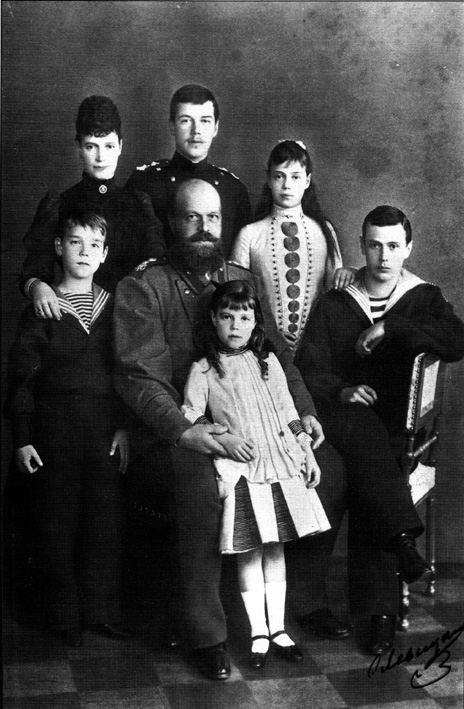
4. Emperor Aleksandre III embracing daughter Olga, wife Empress Maria Dagmar embracing son Michael,
other children: future Emperor Nicolas, daughter Xenia, the Heir George (soon died of tuberculosis).
As a sample of Peterbourg aristocracy the Royal kin of Gottorp Romanov may serve. They were typical Peterbourgians of West-European culture. Their genealogy is well-known. The founder of the Dynasty was Peter III, son of Karl Friedrich von Schleswig-Holstein Gottorp, and Anna, daughter of Peter I of the latter's second marriage. When Peter III came to power, no more masculine descendants of the Dynasty of Romanov existed. Therefore, Peter III adopted the name Romanov and gave it to his descendants. In this way a kind of a new dynasty - that of Holstein Gottorp Romanov - came into being. It is interesting to cast a glance at the table of origins of emperors of the kin Romanov:
Name Origins
Russian Lithuanian German Danish
Peter I 1 - -
Catharine I - 1 -
Peter II 1/2 - 1/2
Anna 1 - -
Ivan VI 1/4 - 3/4
Elisabeth 1/2 - 1/2
PETER III 1/4 1/4 1/2
Catharine II - - 1
Paul I 1/8 1/8 3/4
Alexandre I 1/16 1/16 7/8
Nicolas I 1/16 1/16 7/8
Alexandre II 1/32 1/32 15/16
Alexandre III 1/64 1/64 31/32
Nicolas II 1/128 1/128 31/64 1/2
[Alexis 1/256 1/256 95/128 1/4]
This Table shows origins of the Gottorp Romanov Emperors after Peter III. Of course this does not mean any racial grounding of their non-Russian character. The latter was not genetic but cultural only, determined by their West-European tradition, which was indispensable for each true Peterbourgian. The majority of true Peterbourgians were of the similar origin, although not Royal, at the beginning of the 20th c. Nevertheless such origins made even an anthropological difference between all of them and the majority of Russians who belonged to a more diverse type with a lot of different anthropological, often Asiatic, features. In spite of their own anthropological diversity, the Ethnic Russians very well recognised own people only according to the appearance. This became especially obvious after the Bolshevik revolt of 1917, when the word "white bone" and racial hatred toward "the people in hats" gained currency. In Russia the different appearance was a sign of a different culture. This clearly meant a national difference. Of course, the Emperors comprehended this - Nicolas I, 1825-1855, once even uttered having "no drop of Russian blood in his veins". The same was felt by many Peterbourgians as if their "fault" against the ethnic Russian nation and finally led to a kind of patrioticised "Russian madness", when ethnic Russian dresses and Pseudo-Byzantine church architecture became popular under the 2 last Emperors Alexandre III and Nicolas II. The Russian-Slavophil policy of them was opposite to the policy of their ancestor Peter I, in its turn. In this way they prepared their own catastrophe because they had no comprehension of the ethnic Russian people and character. Such their policy led to the war of 1914 against Germany and to the ruination of the Dynasty together with Sanct-Peterbourg itself.
> Back to Contents >